Architecture nominee
Federico Cabello
Spiral Staircase (Series)
DESCRIPTION
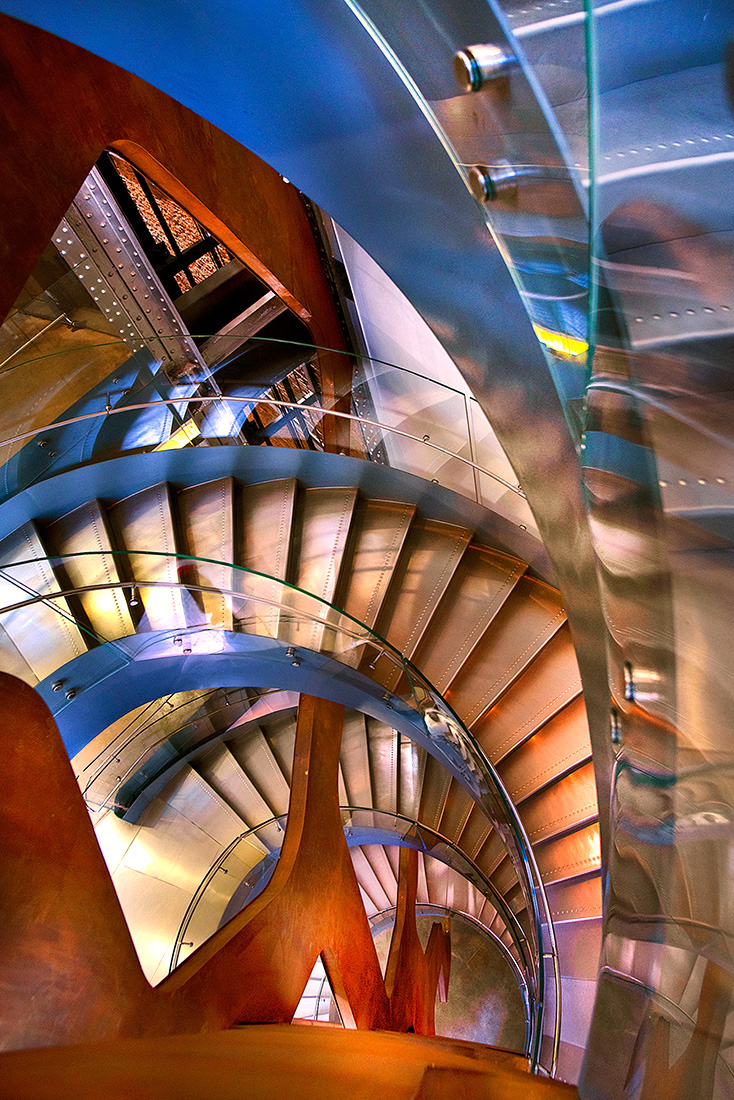
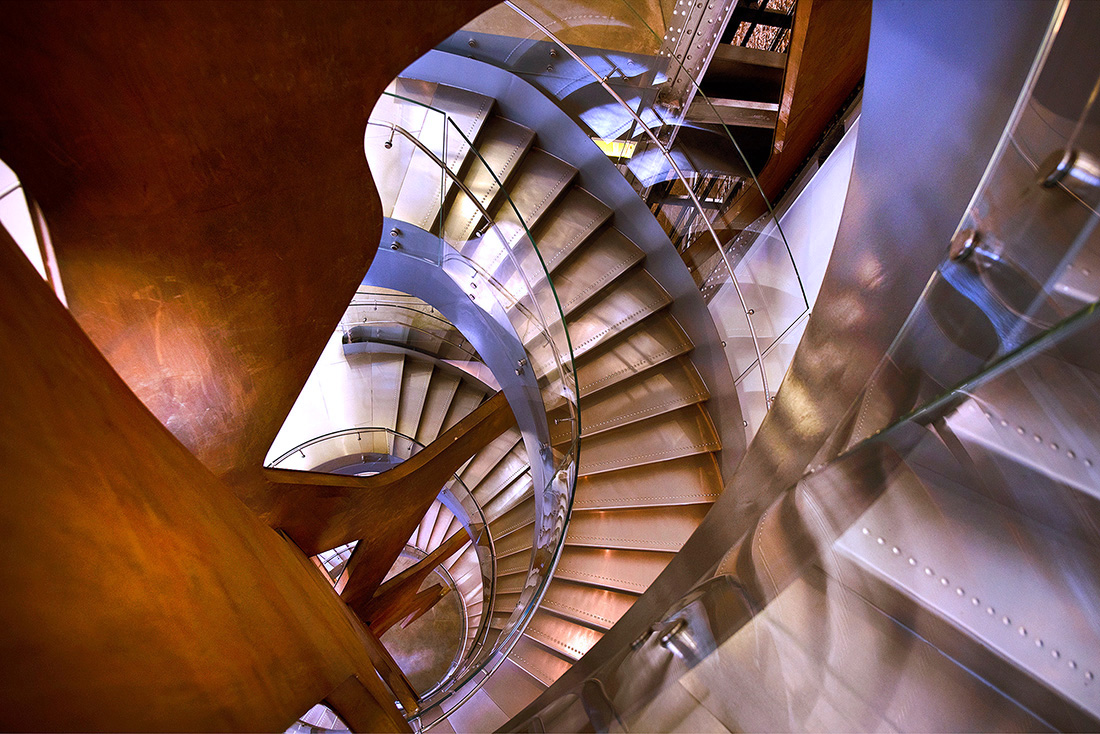
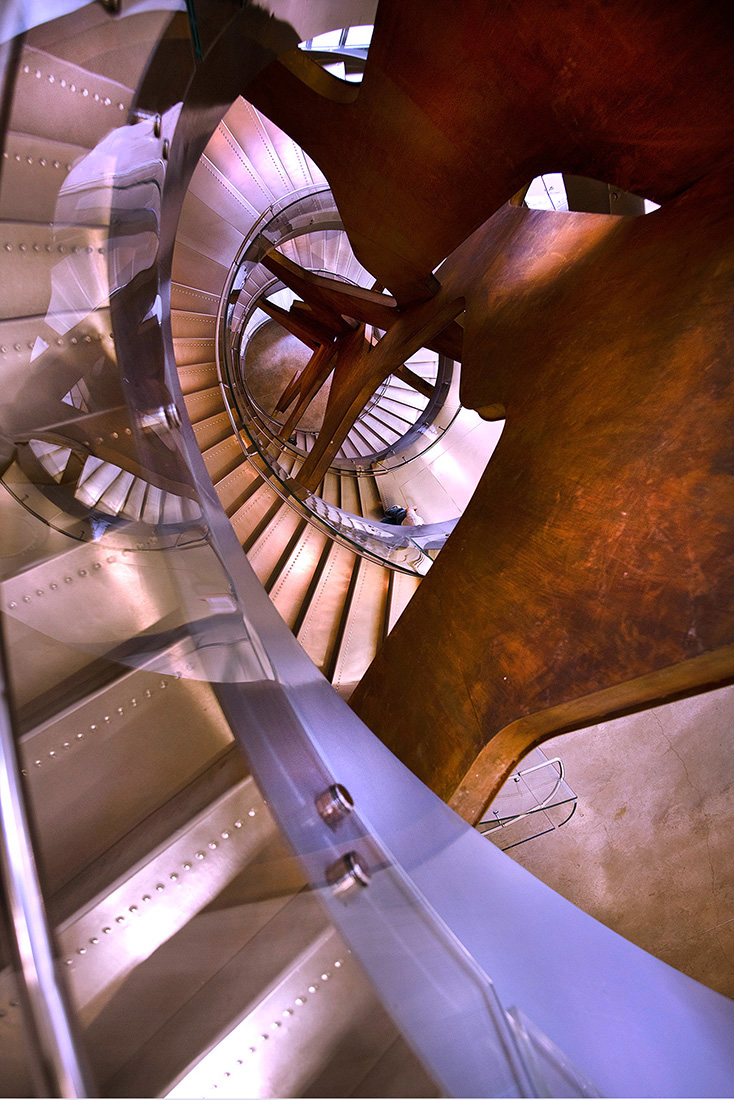
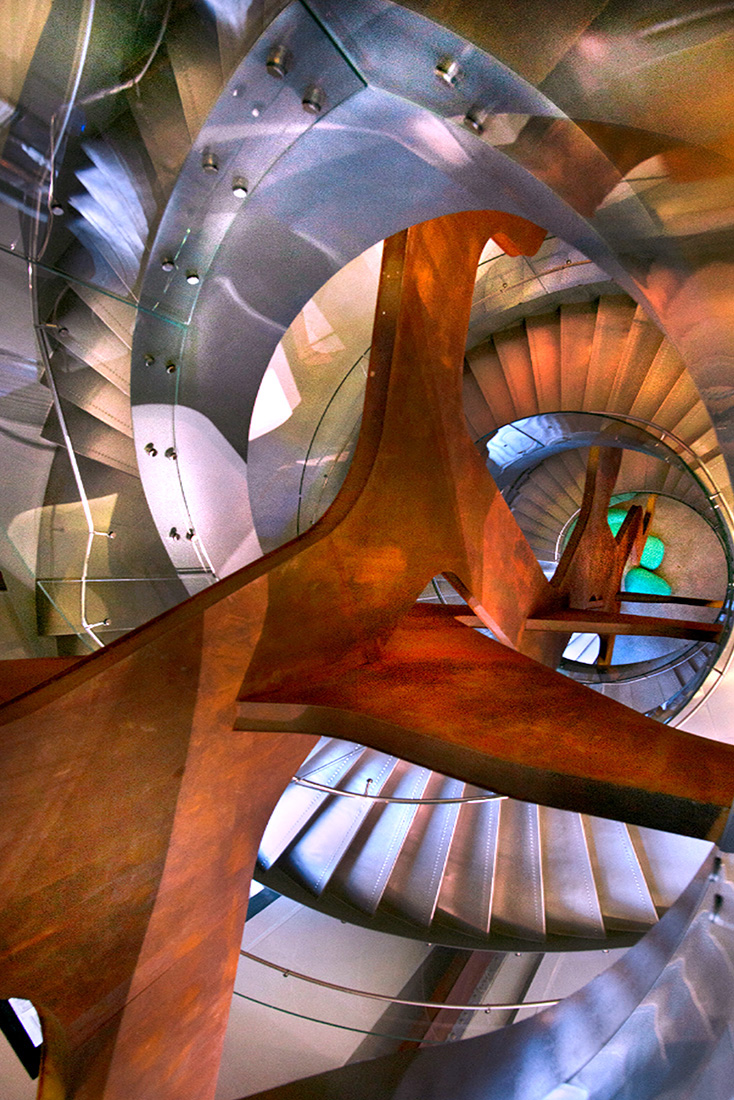
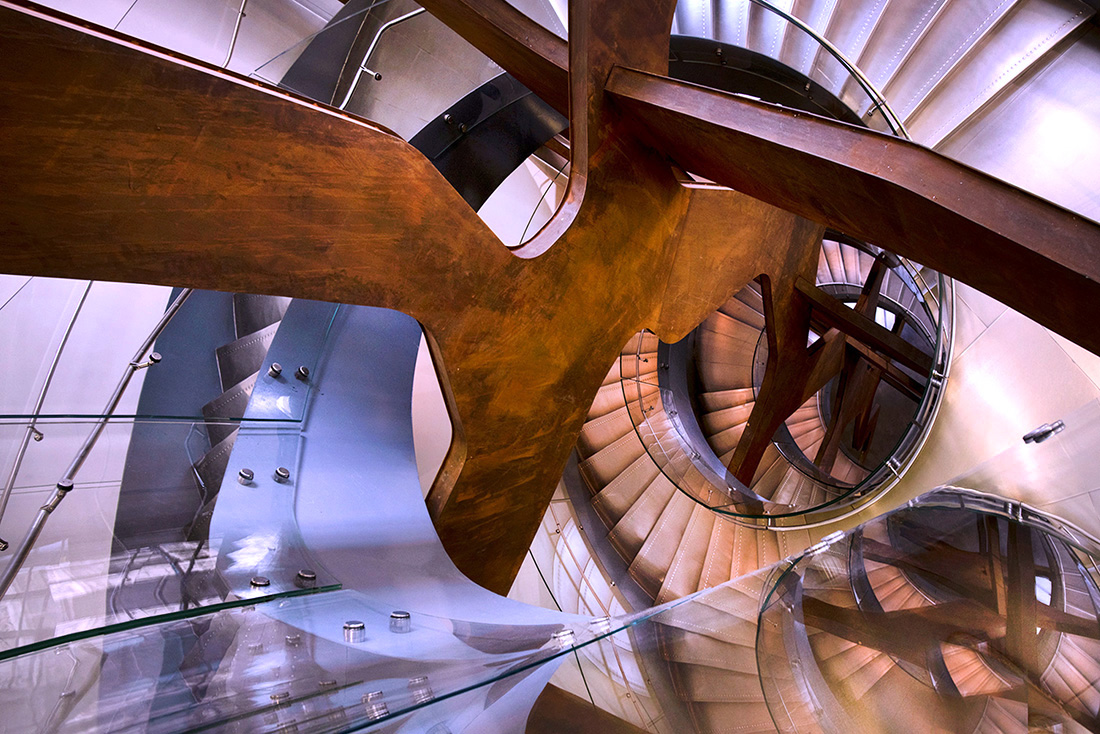
The Spanish studio's museum for Fundación Telefónica features a striking spiral staircase, weaving load-bracing and support for the entire volume in an organic, sculptural form.
The four-storey building occupies the historic Telefónica Building at the top of Madrid's most central street, the Gran Via. The difficult relationships between the reclaimed spaces of the old building has generated the central focus of the project: a prominent, cohesive circulation path that connects all galleries and cultural spaces on the upper floors to one another and to the street.
Two and a half quadrants of the structural grid abutting the façade saw their existing floor plates demolished to create a vertical atrium space into which a large spiral staircase was inserted. The staircase weaves through an organic, sculptural form which serves simultaneously as lateral-load bracing for the building's façade — necessary after the removal of the floor slabs — and dead-load support for the stair helix. A high-capacity glass elevator completes the vertical circulation nucleus.
AUTHOR
Federico Cabello is a photographer and visual artist with a profound gift for capturing beauty in any environment—from the raw majesty of the natural world and architecture to the subtle, unexpected details of everyday life. He is the acclaimed author of nine photography books that blend documentary precision with a distinct artistic vision.
His extensive editorial career includes five volumes dedicated to the natural wonders of the Los Roques Archipelago (Venezuela), as well as the photography books: "Bonaire Point to Point", "Aruba Point to Point" and "Providenciales Point to Point" in Turk and Caicos that explore the wild and untamed beauty of the Caribbean in a point-to-point journey. His mastery of light and composition has earned his work a place in prestigious global publications, including National Geographic.
The same pursuit of evocative aesthetics that defines his books now guides his production of fine art. His collections—such as Agua y Luz, Agua y Viento, and Classic and Modern Architecture—are transformed into large-format artistic pieces. Mounted in museum-quality acrylic, these works are designed to serve as fundamental elements in sophisticated, carefully designed spaces. For Federico, the ultimate fulfillment lies in seeing his art achieve a superior aesthetic harmony within a curated interior.
←
back to gallery