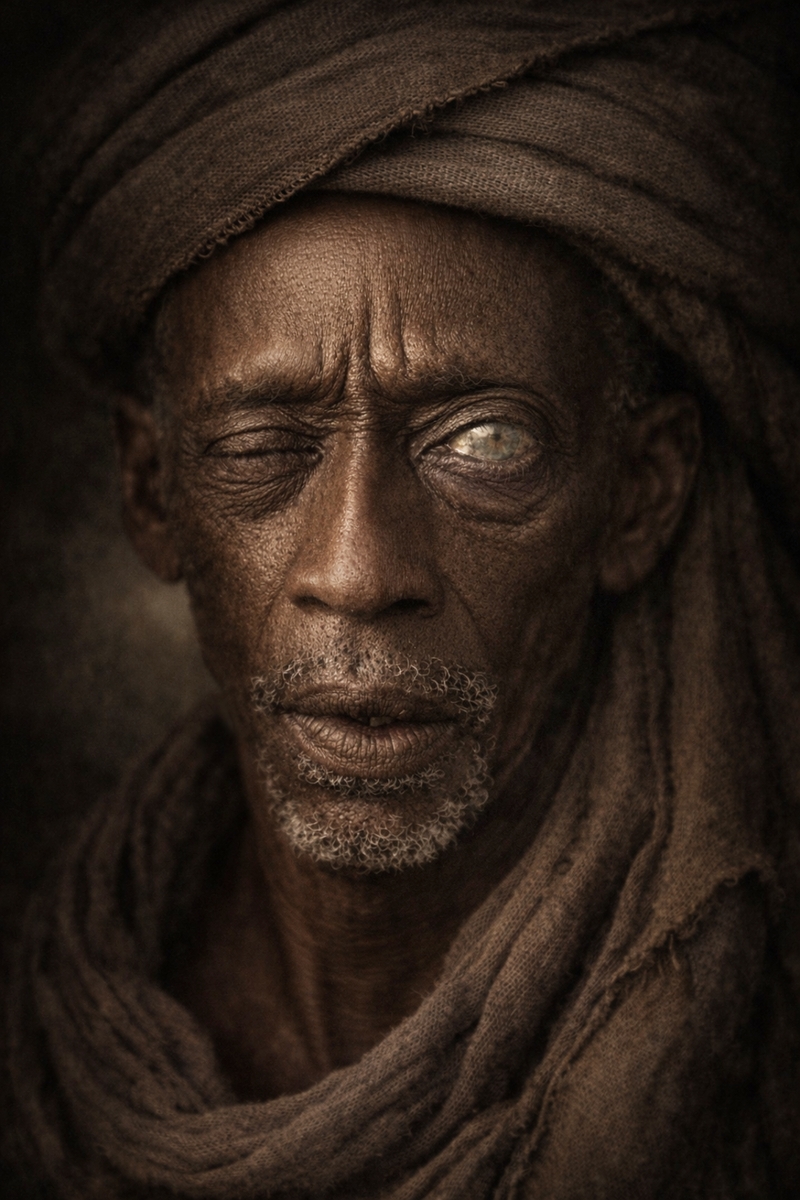
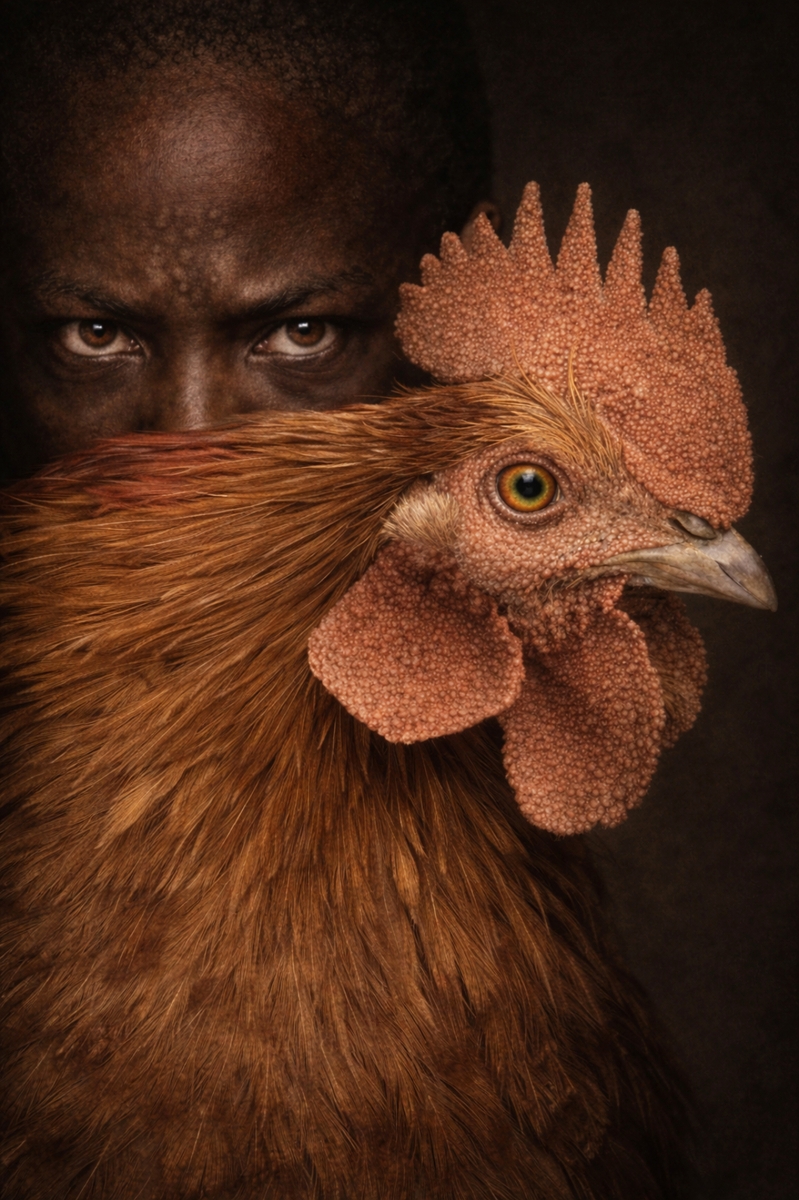
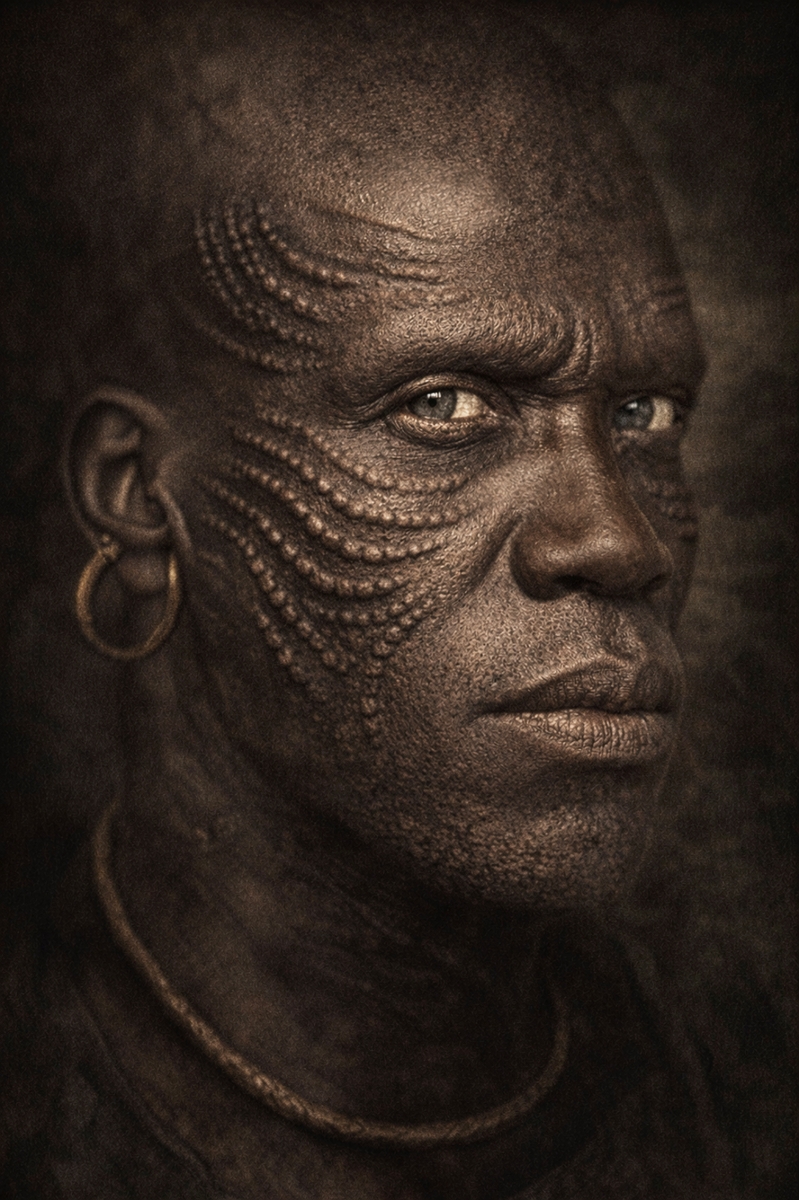
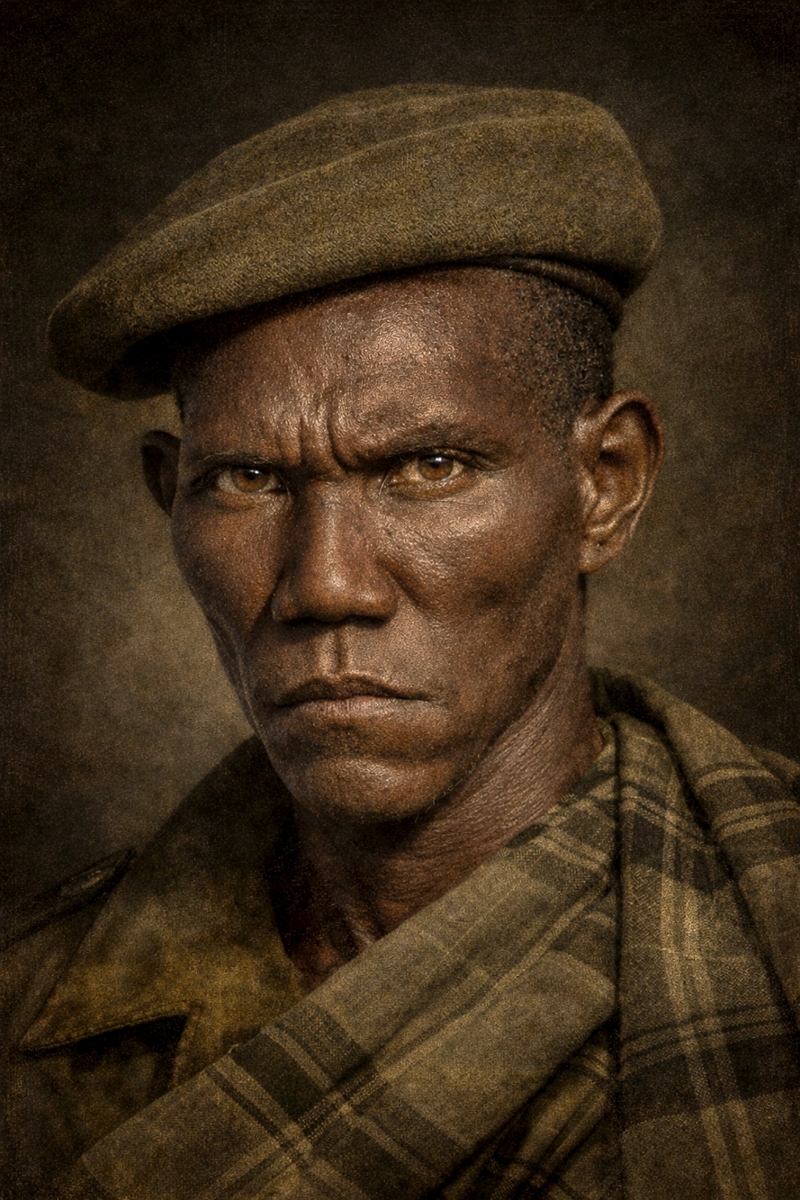
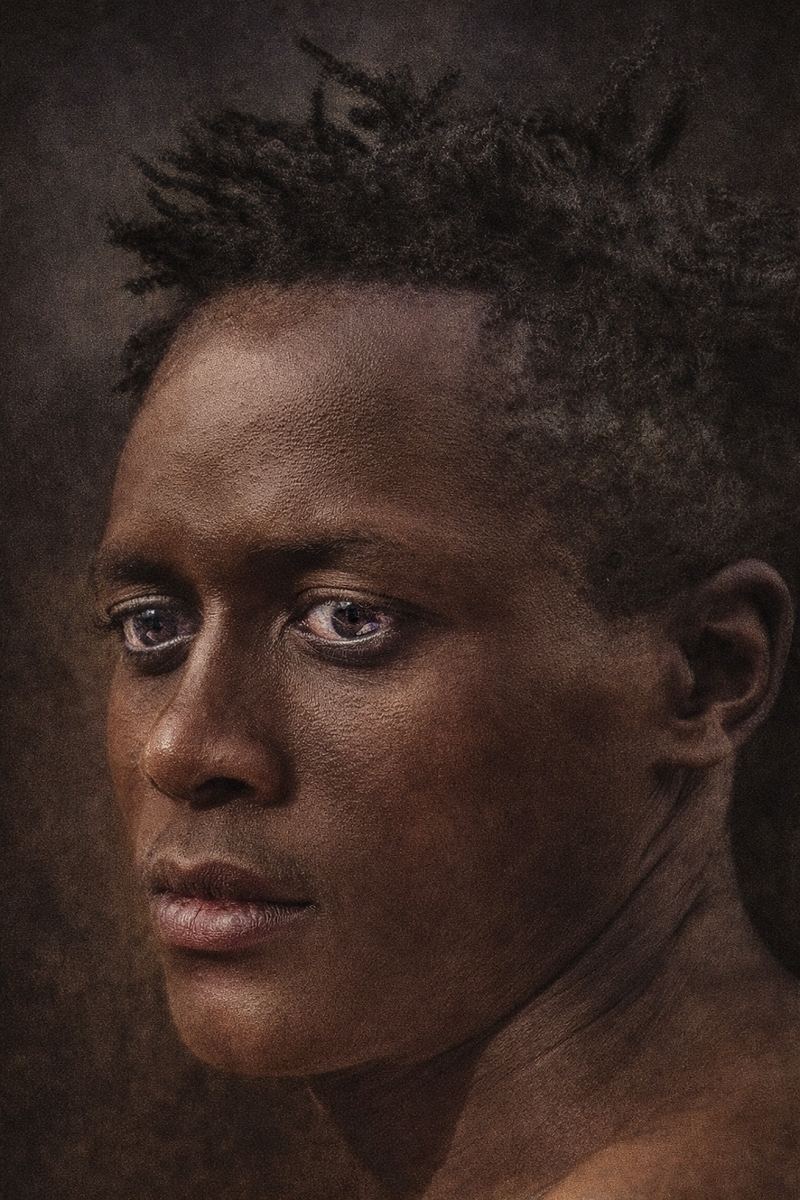
In this series, the portrait unfolds as an intimate cartography of the face—a sensitive geography that resists both reading and possession. The face is not presented as a territory open to visual exploration, but as a field of forces shaped by time, experience, and presence. This cartography belongs neither to anatomy nor to psychology; it is constructed through the encounter of gazes, organized around an irreducible point of tension.
The gaze forms the center of gravity of this intimate cartography. It does not guide the viewer; it disorients them. Through its intensity, it reverses the conventional hierarchy of portraiture: the viewer no longer occupies a position of sovereignty, but is instead situated, exposed. In front of these faces, one does not simply look—one is implicated. This implication generates a specific form of vulnerability, rooted in the loss of visual mastery and in the impossibility of stabilizing meaning.
Around this core, the skin functions as a palimpsest of lived experience. Wrinkles, textures, and marks constitute stratified traces of time, not as signs to be deciphered, but as layers of opacity. Light does not clarify this cartography; it accentuates its fractures, thresholds, and zones of withdrawal.
Thus, the portrait becomes a cartographic

amateur category
(untitled) (Series)
DESCRIPTION
AUTHOR
He began his career in the theatre, co-founding the "Théâtre X" company.
In 1988, he took a highly successful series of black and white photographs of human figures reflected in distorting mirrors. Several books followed.
In 1993, he became interested in uncontrolled postures, plunging his subjects into darkness in a studio and 'painting' their outlines with a beam of light, the intrusion of light creating accidents of form.
In 2007, he took a complete break from studio work and produced a powerfully dreamlike series of photographs of children in Africa.The book « Dreamt memories from Africa » followed. He then became a teacher, running workshops all around the world and elsewhere.
He began working with colour in 2010, revisiting the same themes and taking inspiration from classical paintings. In 2012 The Musee de la Photography in Belgium and the Maison Européennne de la Photographie in Paris organized jointly a succesful rétrospective exhibition
The book « William Ropp 20 years of Photography » was launched for this occasion.
Today, his works form part of some of the greatest public collections
In 1988, he took a highly successful series of black and white photographs of human figures reflected in distorting mirrors. Several books followed.
In 1993, he became interested in uncontrolled postures, plunging his subjects into darkness in a studio and 'painting' their outlines with a beam of light, the intrusion of light creating accidents of form.
In 2007, he took a complete break from studio work and produced a powerfully dreamlike series of photographs of children in Africa.The book « Dreamt memories from Africa » followed. He then became a teacher, running workshops all around the world and elsewhere.
He began working with colour in 2010, revisiting the same themes and taking inspiration from classical paintings. In 2012 The Musee de la Photography in Belgium and the Maison Européennne de la Photographie in Paris organized jointly a succesful rétrospective exhibition
The book « William Ropp 20 years of Photography » was launched for this occasion.
Today, his works form part of some of the greatest public collections
back to gallery