GIANLUCA SANTONI
INDUSTRIAL POP (Series)
DESCRIPTION
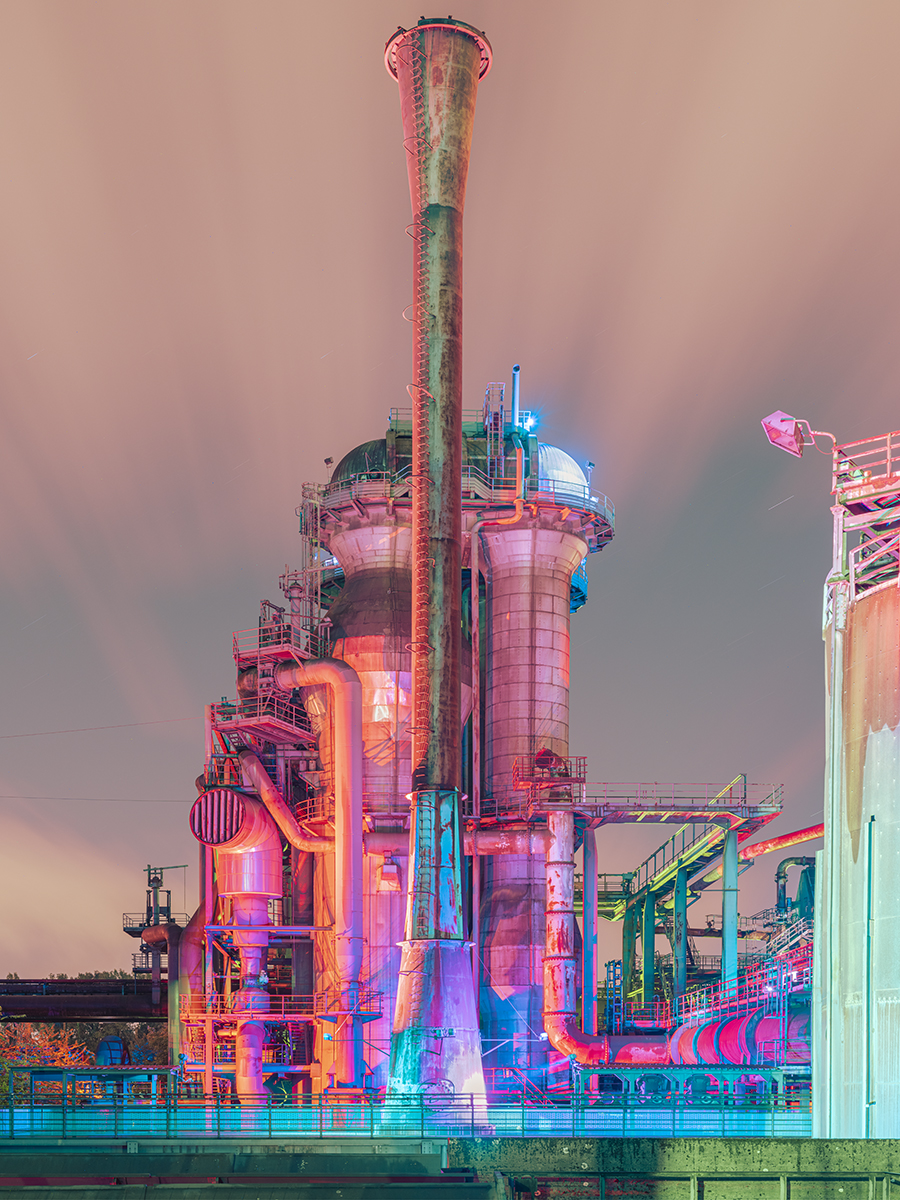
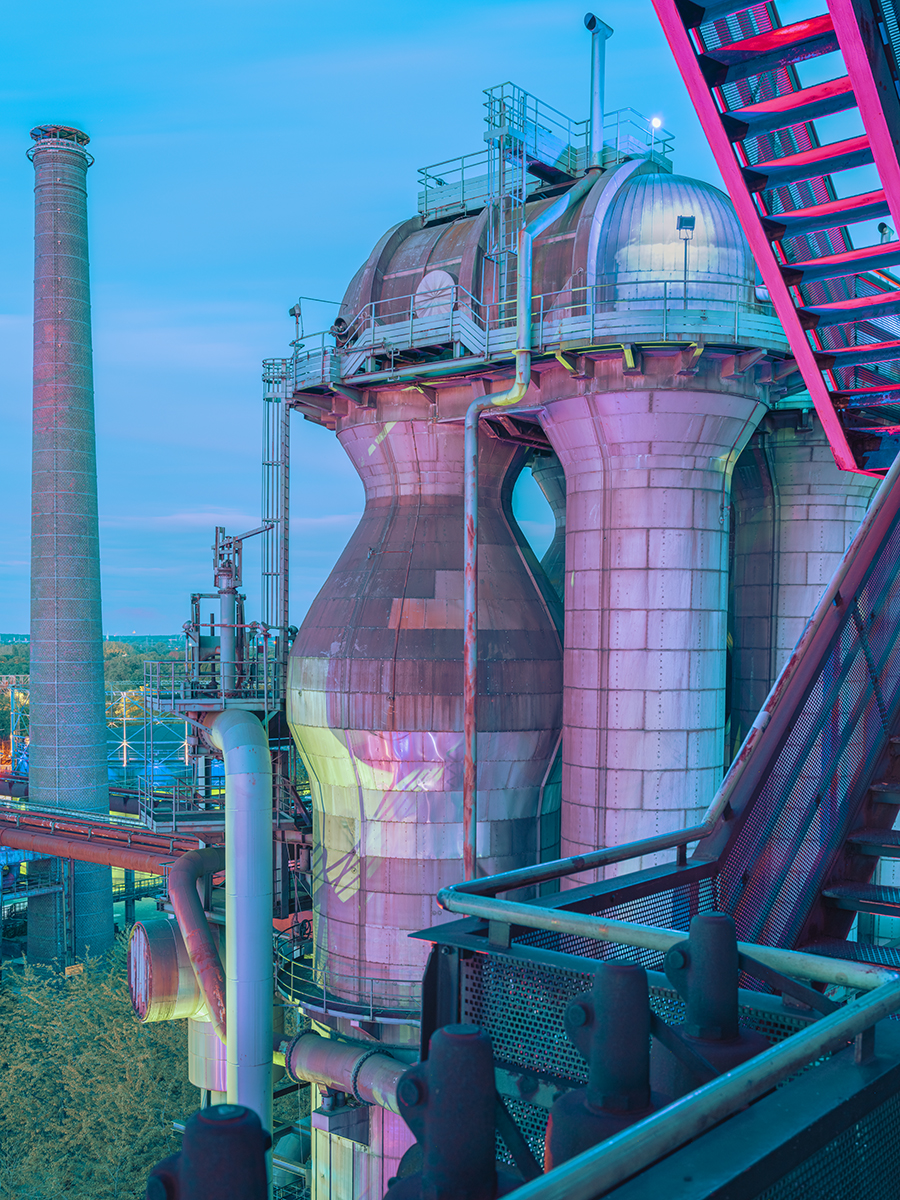
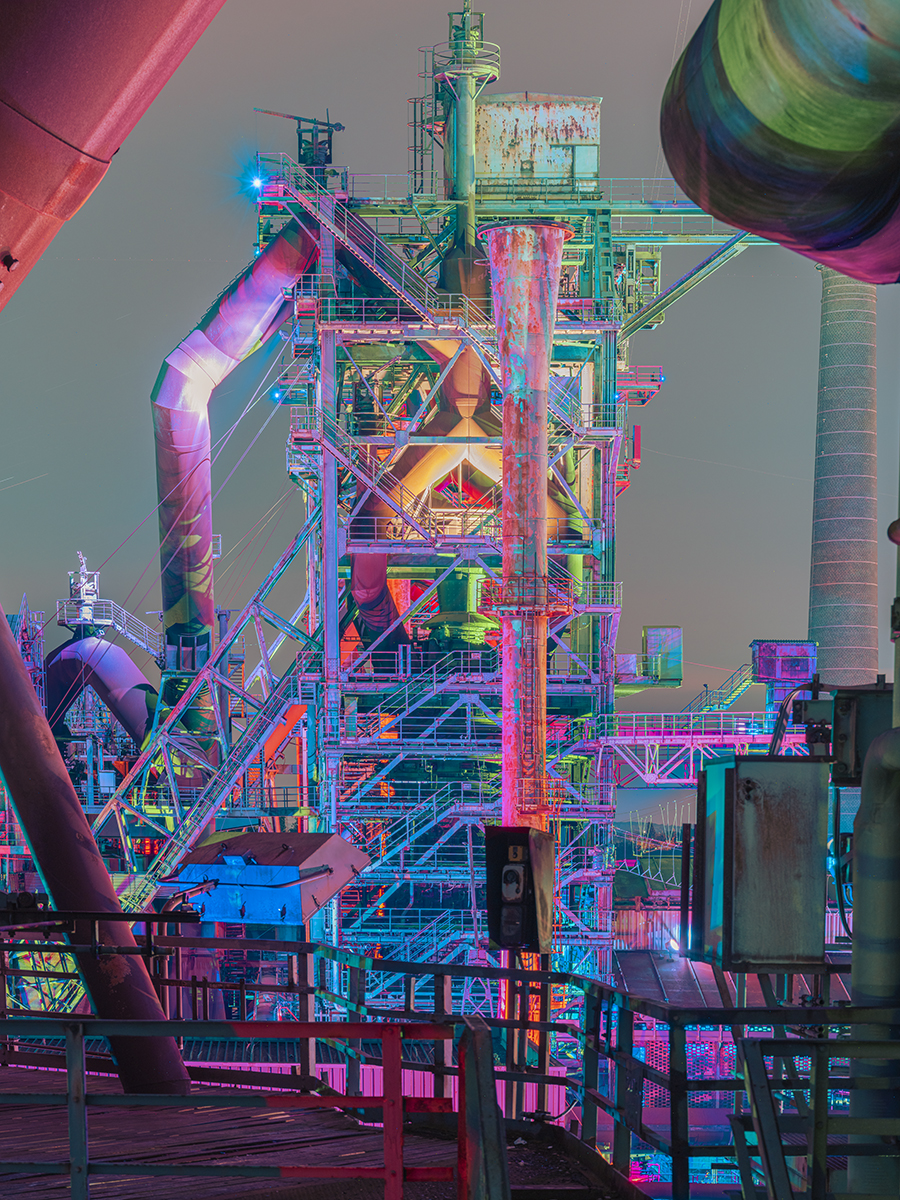
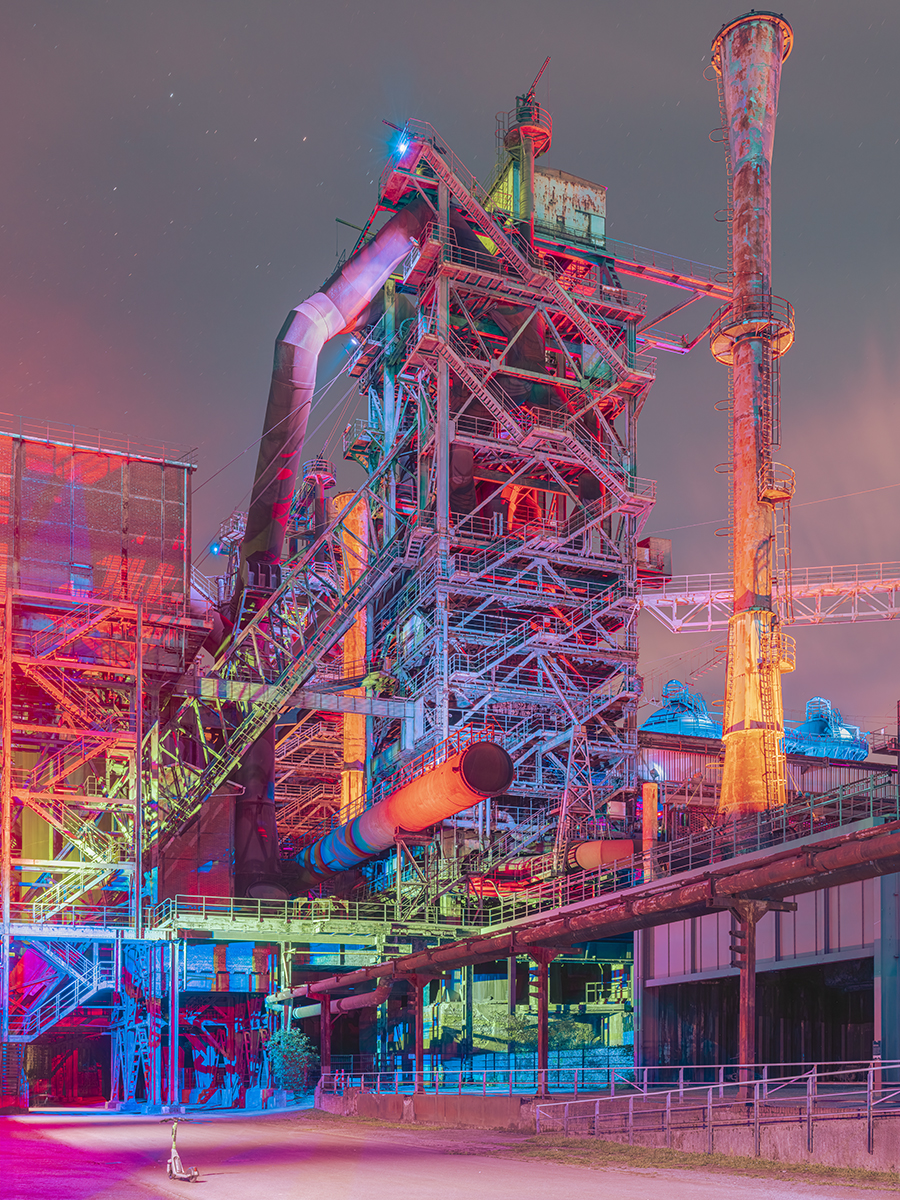
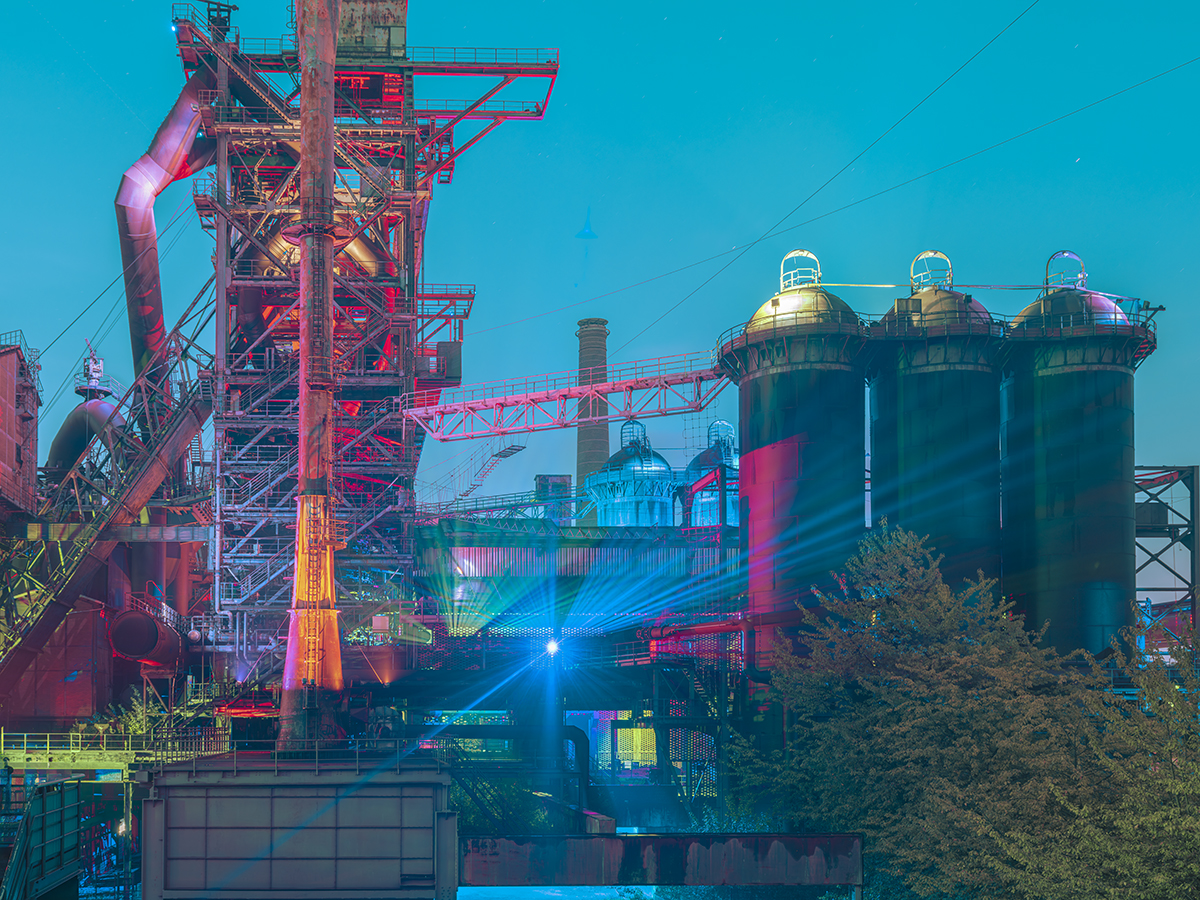
This series explores the structural transformation of the former Duisburg foundry, once known as “the Forbidden City.” Industrial spaces that were once places of labor and production are now transformed into scenes of light and color. Through pop-inspired lighting, their austerity is subverted, igniting the architecture with vivid, visionary hues. Cold surfaces become immersive landscapes, where the memory of the past intertwines with new aesthetic and perceptual possibilities.
AUTHOR
Since his debut in 1989 on the pages of "L’Illustrazione Italiana", Santoni has portrayed the world through the lens, collaborating with leading international publications such as "National Geographic Traveller", "The New York Times Travel", "Geo", and "AD". Today he focuses on fine art and authorial photography, pursuing a path that intertwines aesthetics, narrative sensitivity, and reflection on the role of the contemporary image.
His career, marked by international awards and recognition, reveals a journey in which technical mastery merges with a deeply poetic vision. Santoni does not conceive photography as mere documentation, but as a medium capable of cultivating hope and beauty, transforming the viewer’s gaze and offering a more luminous perspective on reality.
In his work, aesthetics are an essential component of content and meaning: each image possesses its own formal autonomy while contributing to a coherent vision grounded in elegance, harmony, and trust. His research goes beyond appearances, seeking to reveal hidden harmonies, signs, and correspondences perceptible only to an attentive eye.
Photography thus becomes an act of suspension and preservation, a language that resists emptiness and restores balance and meaning. Santoni’s images emerge as spaces of reflection and refuge, reaffirming the value of art as orientation and
←
back to gallery